Malice (悪意)
About This Book
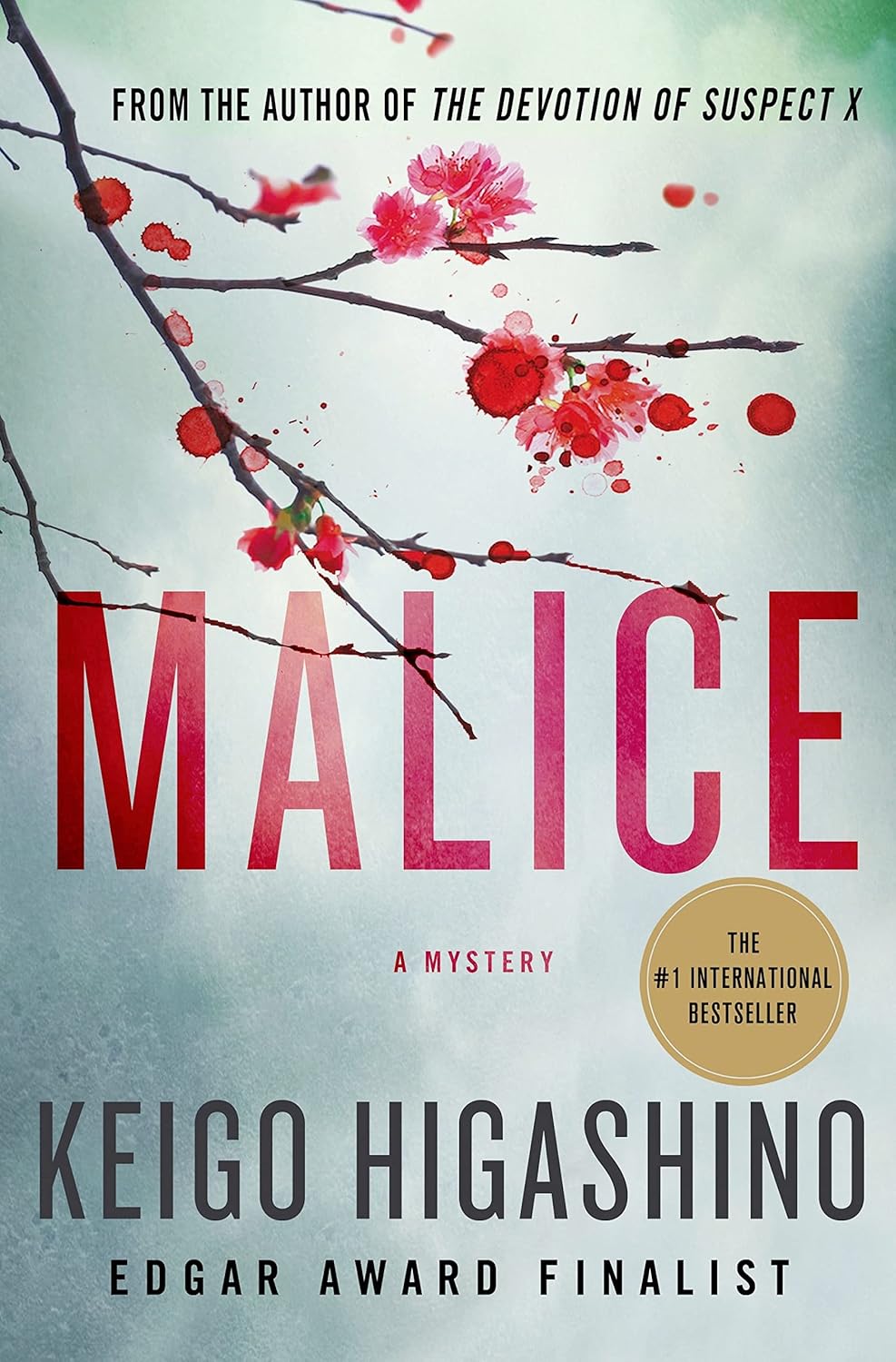
My Personal Take
『悪意』disturbed me in ways few mysteries have. I first read it on a train from Tokyo to Kyoto, thinking I'd finish it during the journey. Instead, I found myself so unsettled that I had to put it down several times, not from boredom but from a growing sense of unease about human nature itself.
This isn't a whodunit—we know the killer's identity almost immediately. It's not even really a howdunit. It's something far more disturbing: a whydunit that peels back layers of human motivation until you're staring into an abyss of pure, inexplicable malice. Even now, years later, I find myself thinking about the implications of what Higashino reveals about the stories we tell ourselves and others.
What Makes This Special
The Structure: A Novel in Documents
Higashino structures the novel as a series of documents—police reports, diary entries, manuscripts—that gradually reveal the truth. But here's the genius: even documents lie. What seems like objective evidence becomes another layer of deception. As a Japanese reader, I was particularly struck by how Higashino uses the formal, seemingly neutral tone of police reports to hide emotional devastation.
The novel essentially has three acts:
- The crime and immediate confession
- The investigation that reveals the confession is false
- The true investigation into motive
Each act completely recontextualizes what came before. By the end, you realize you've been reading a completely different story than you thought.
Cultural Context That Matters
The Weight of Success: In Japan, there's immense pressure to succeed, but there's also something darker—the way we sometimes resent others' success, especially when we feel we deserve it more. The term "妬み" (netami, envy) doesn't quite capture it. It's closer to the German "schadenfreude" but inverted—not joy at others' misfortune, but misery at their fortune.
The Childhood Friend Dynamic: The relationship between childhood friends (幼馴染, osananajimi) carries special weight in Japanese culture. These are people who knew you before you learned to wear masks, who remember who you really are beneath the social facade. When such relationships sour, the betrayal cuts deeper than any other.
The Literary World's Shadows: Both main characters are writers, and Higashino's portrayal of Japan's literary world—the jealousies, the careful hierarchies, the public faces versus private resentments—rings devastatingly true. Having worked adjacent to this world, I recognized the dynamics immediately: the successful author who must downplay achievements, the struggling writer who must hide bitterness.
Face and Humiliation: The concept of "face" (面子, mentsu) drives the entire narrative. In Japanese society, public humiliation is a kind of social death. But Higashino asks: what if someone's very existence humiliates you? What if their success constantly reminds you of your failure?
The Nature of Truth
What fascinated me most is how Higashino interrogates the concept of truth itself. In Japanese, we have different words for different kinds of truth: 事実 (jijitsu, factual truth) versus 真実 (shinjitsu, essential/emotional truth). The killer in 『悪意』 manipulates jijitsu to obscure shinjitsu, using facts to build elaborate lies.
Detective Kaga's method reflects a particularly Japanese approach to investigation. He's not interested in dramatic confrontations or brilliant deductions. Instead, he patiently peels away layers of deception through careful observation of human relationships. His background as a teacher becomes crucial—he understands how people construct narratives about themselves.
The Ultimate Revelation
Without spoiling specifics, the final revelation about motive is both simple and incomprehensible. It's the kind of motive that makes perfect sense to the perpetrator and no sense to anyone else. This is what makes it so chilling—the recognition that people can nurture hatred for reasons that seem utterly trivial to others but consume their entire being.
In Japanese Buddhism, we have the concept of 執着 (shuuchaku)—unhealthy attachment that causes suffering. The killer's motivation is shuuchaku taken to its logical extreme: an attachment to a particular view of oneself and one's place in the world so strong that anything threatening it must be destroyed.
Translation Excellence
The translation team faces unique challenges here, as much of the novel's effect depends on tone—the contrast between formal, emotionless prose and the emotions it conceals. They succeed admirably, particularly in the police report sections where the bureaucratic language becomes increasingly sinister as we understand what lies beneath.
Some cultural nuances inevitably get simplified—the specific implications of certain honorifics, the subtle gradations of politeness that reveal changing relationships. But the emotional core comes through with devastating clarity.
Discover the Dark Side of Human Nature
Experience Higashino's most psychologically disturbing masterpiece.
📚 Get Your Copy on AmazonWhy This Matters
『悪意』is essential reading for anyone interested in:
- How mysteries can transcend genre to become psychological studies
- The Japanese concept of "inner" versus "outer" truth
- The construction and deconstruction of narrative
- The pathology of envy and resentment
It's also a masterclass in mystery construction. Higashino plays completely fair—all clues are present from the beginning. But like the detective in the story, we're looking in the wrong direction, asking the wrong questions.
Reading Notes
- Pay attention to what each narrator chooses to include or omit
- The chronology matters—when things are revealed is as important as what is revealed
- Don't trust any narrator, including the detective
- Consider reading twice—the second reading is a completely different experience
Final Verdict
『悪意』is Higashino at his most psychologically acute. It's not his most emotionally affecting work (that would be 『容疑者Xの献身』) or his most ambitious (『白夜行』), but it might be his most perfectly constructed. It's a mystery that uses the genre's conventions to explore something darker: the stories we tell about ourselves and others, and how those stories can become weapons.
The title—『悪意』—is perfect. This isn't about evil in any grand sense. It's about malice: petty, personal, inexplicable, and therefore all the more chilling. It's about the grudges we nurture in private until they poison everything they touch.
Essential reading, but be warned: it might change how you think about the people around you, and not for the better.
Malice
Translated by Alexander O. Smith with Elye J. Alexander
A psychological masterclass that explores the darkest corners of human motivation. Prepare to question everything you think you know about truth.
If You Enjoyed This...
Try The Devotion of Suspect X for more Higashino's mathematical precision, or explore Journey Under the Midnight Sun for another psychological masterpiece that spans decades.