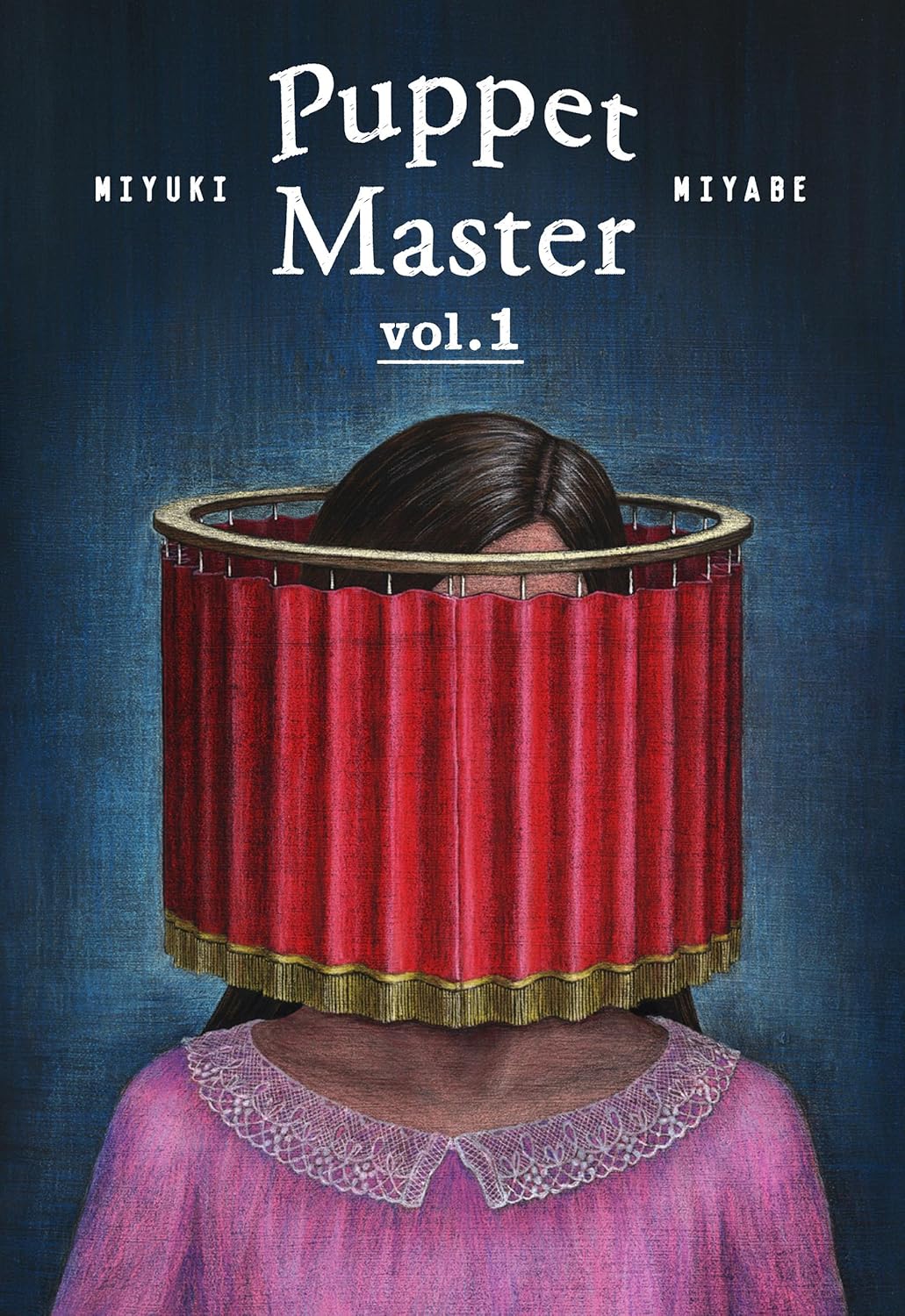
Puppet Master (模倣犯)
About This Book
My Personal Take
When I first read 『模倣犯』in Japanese, I was working as a journalist in Tokyo during the height of the sensationalist media boom of the early 2000s. The parallels between Miyabe's fictional media circus and what I was witnessing daily were so uncanny that I had to put the book down several times—not from boredom, but from recognition. This is a novel that predicted our current media landscape with frightening accuracy.
At over 500 pages, this isn't just a mystery novel; it's a social autopsy of modern Japan. Miyabe dissects how media manipulation, public fascination with violence, and the hunger for sensational stories create the perfect breeding ground for copycat crimes. What makes it masterful is how it refuses to offer easy answers or clear villains—instead, it shows how we're all complicit in the system that creates monsters.
What Makes This Special
The Structure: Multiple Perspectives, Single Truth
Miyabe employs a complex narrative structure that follows dozens of characters—victims' families, journalists, police officers, and the perpetrators themselves. Each voice adds another layer to our understanding of how a single horrific crime ripples through society. It's like watching a slow-motion explosion where each fragment reveals another aspect of the damage.
The genius lies in how Miyabe shows the same events from different angles, revealing how media coverage, public opinion, and institutional responses shape not just our perception of crime, but crime itself. The "copycat" element isn't just about imitating methods—it's about how society's reaction to violence creates templates for future violence.
Cultural Context That Matters
Media as Character: In Japan, the media's role in shaping public consciousness is particularly complex. The concept of "kuuki wo yomu" (読空気, reading the atmosphere) means understanding unspoken social expectations. Miyabe shows how media doesn't just report the news—it creates the "kuuki" that determines how society responds to tragedy.
The Weight of Collective Responsibility: Japanese society emphasizes group accountability, but Miyabe explores the dark side of this: how collective guilt can be manipulated, how shame becomes a weapon, and how the desire to maintain social harmony can actually enable further violence.
Victim Culture and Public Spectacle: The way Japan handles victim advocacy and public mourning—the elaborate press conferences, the formalized apologies, the media's hungry consumption of grief—becomes central to understanding how copycat crimes develop. Miyabe shows how genuine suffering becomes commodified into entertainment.
The Copycat Phenomenon
What disturbed me most about this novel was its prescient understanding of how modern media creates "copycat culture." Long before social media algorithms, Miyabe understood that attention itself becomes a motive. The criminals in this story aren't just copying methods—they're copying the entire performative aspect of being a notorious criminal.
The novel explores how media coverage doesn't just report on crime; it provides a blueprint for future criminals. Every detail released, every interview conducted, every moment of coverage becomes instruction material for the next perpetrator. It's a vicious cycle that Miyabe maps with surgical precision.
Ready for a Challenging Social Commentary?
Experience Miyabe's masterful exploration of crime, media, and modern Japanese society.
📚 Get Your Copy on AmazonThe Translation Challenge
Alfred Birnbaum faces an enormous challenge in translating this work. The novel is dense with Japanese media terminology, police procedural language, and subtle social commentary that depends on understanding Japanese institutional culture. He largely succeeds, though some of the more nuanced critiques of Japanese media practices may be lost on English readers.
What comes through clearly is Miyabe's anger—not just at the criminals, but at the society that creates them. Her critique of Japanese media, police, and public institutions is devastating, and Birnbaum preserves this righteous fury without losing the complex sympathy she shows for individual victims.
More Than Mystery
While this is nominally a crime novel, it's really social criticism disguised as entertainment. Miyabe uses the mystery framework to examine:
- How media creates celebrity criminals
- The way institutions prioritize image over truth
- How public fascination with violence becomes complicity in violence
- The thin line between justice and revenge
- How technology changes the nature of crime and punishment
The mystery elements are solid, but they're not the point. The real mystery is how a civilized society can create the conditions for such savagery—and how we can be entertained by that savagery while condemning it.
A Warning About Length and Pacing
This is a long, deliberately paced novel that builds its effects through accumulation rather than shock. Western readers expecting the tight plotting of authors like Agatha Christie may find it challenging. Miyabe's approach is more akin to a 19th-century social novel—think Dickens or Zola—that uses crime as a lens to examine society.
The payoff is worth the investment, but be prepared for a reading experience that demands patience and attention. This isn't a book to read casually; it's a book to engage with seriously.
Final Verdict
『模倣犯』is essential reading for anyone trying to understand how modern media and crime intersect. Written in the early 2000s, it feels prophetic in our age of viral violence and social media-driven crimes. Miyabe doesn't just tell a crime story; she diagnoses a cultural sickness that has only gotten worse since publication.
This is Japanese mystery fiction at its most ambitious and socially conscious. It's not entertaining in any comfortable sense—it's disturbing, challenging, and absolutely necessary. Years after reading it, I still think differently about media coverage of violent crimes, and I'm more aware of my own complicity as a consumer of such coverage.
Not for readers seeking escapist entertainment, but absolutely essential for anyone interested in how literature can illuminate the dark corners of contemporary society.
Puppet Master
Translated by Alfred Birnbaum
Miyabe's epic exploration of media manipulation and copycat crimes—essential reading for understanding modern Japanese society.
If You Enjoyed This...
Try Journey Under the Midnight Sun for another epic Japanese crime saga, or Malice for another exploration of criminal psychology.